
You're probably reading this because someone told you to "fast before your ultrasound" and you're wondering... why exactly? Can't you just have a quick coffee? What's the big deal?
Here's the thing, and we wish more healthcare providers explained it upfront. Those preparation instructions aren't bureaucratic nonsense. They're the difference between getting clear, useful images and having to come back for another appointment because the first scan was basically useless.
Let our team walk you through what's really happening, because once you understand the "why," the "what" makes a lot more sense.
Why Your Breakfast Actually Matters (More Than You Think)
Here's what most people don't realize: ultrasound works by sending sound waves through your body. Think of it like... well, imagine you're trying to take a photo through a foggy window. That fog? In your body, it's often gas from food digestion.
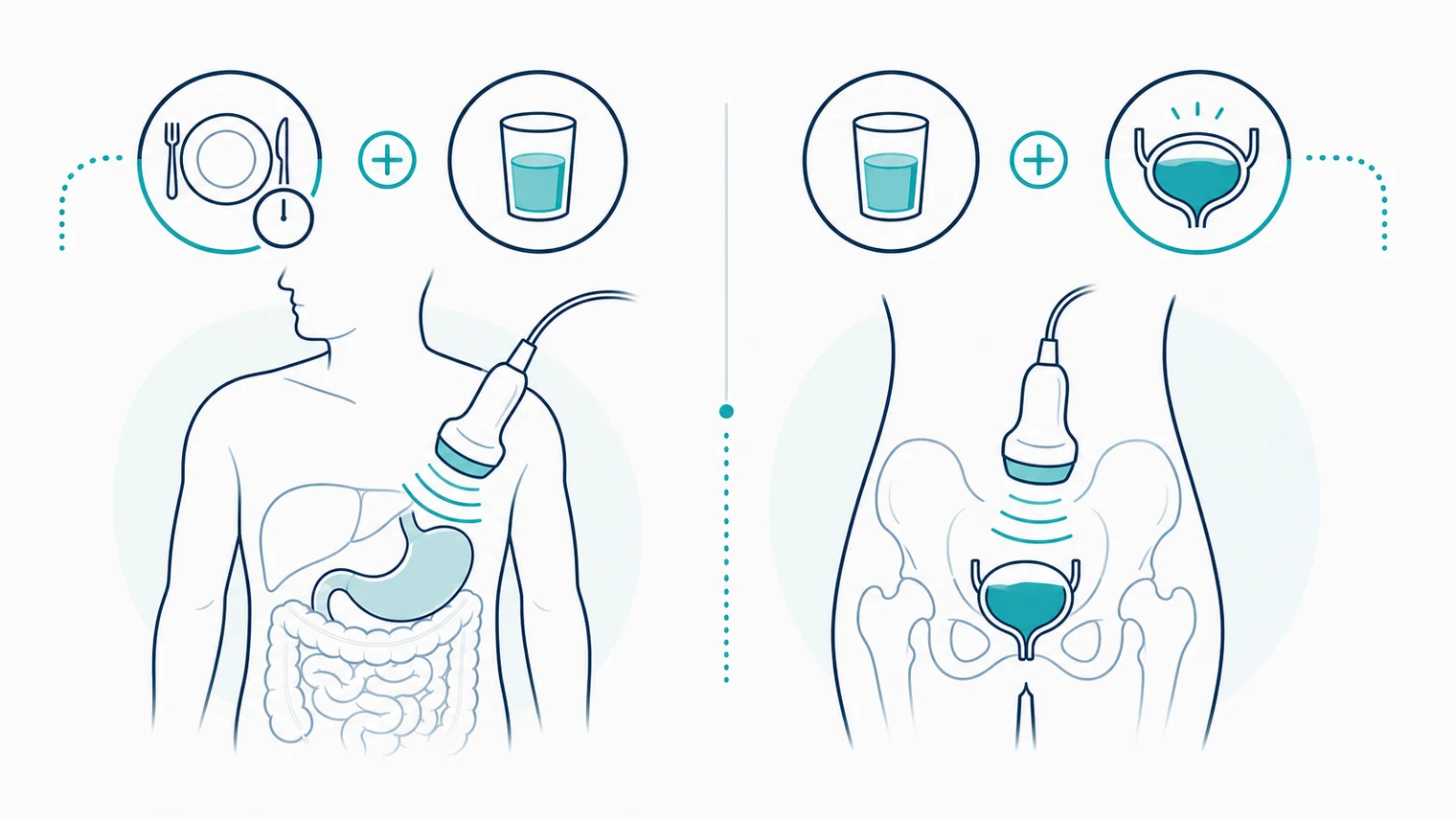
When you eat, your digestive system gets to work, creating gas bubbles in your intestines. Sound waves can't travel through gas effectively. The gas creates what we call "acoustic shadowing," which literally blocks the view of organs behind it. It's like trying to see through a brick wall.
Here's where it gets interesting. For abdominal scans, we need to see your gallbladder, liver, and pancreas clearly. When you eat (especially anything fatty), your gallbladder contracts to release bile for digestion. A contracted gallbladder is nearly impossible to examine properly, which means we might miss gallstones or other issues affecting your health.
The statistics are pretty compelling: proper fasting improves gallstone detection accuracy to over 90%. Without proper preparation, we're basically shooting in the dark.
The Full Bladder Mystery (And Why It's Not Torture)
If you're getting a pelvic ultrasound, you've probably been told to drink a fair bit of water and then... not pee. We know, it sounds like medieval torture.
There's actually a brilliant reason for it. Your full bladder acts like a "sonic window," filled with fluid that sound waves travel through easily. More importantly, it pushes the gas-filled bowel out of the way, giving us a crystal-clear view of your pelvic organs.
Think of your bladder as nature's own contrast agent. It lifts your uterus and ovaries, bringing them closer to the surface where we can see them better. Without it, we're back to that foggy window situation.
The typical instruction is to drink about 1 litre (32 US fl oz) of water 45-75 minutes before your appointment. Yes, you'll be uncomfortable. But it's worth it for getting accurate results the first time.
The Real-World Impact of Getting It Wrong
Here's something that might surprise you: patients miss nearly 24% of outpatient imaging appointments. And when people do show up but haven't prepared properly, the scan often has to be repeated.
The numbers are staggering. Some radiology departments lose $300,000 to $400,000 per year from missed appointments and non-diagnostic scans alone. More importantly for you, the average ultrasound costs between $200 and $800. Having to repeat it because you grabbed that morning latte could mean another few hundred dollars out of your pocket.
Beyond the money, there's the time factor. Delayed diagnosis means delayed treatment. And in healthcare, timing can be everything.
Your Specific Preparation Guide (The Stuff That Actually Matters)
Alright, let's get practical. Here's what you actually need to know, broken down by scan type:
Abdominal Scans (Liver, Gallbladder, Pancreas)
The Fast: 6-12 hours before your appointment. For morning scans, that usually means nothing after midnight. Afternoon appointment? You might get away with a light, non-fatty breakfast, but check with your provider first.
What you CAN have:
- Water (small sips if you're dying of thirst)
- Black coffee or tea (without milk or sugar)
- Essential medications with water
What's absolutely off-limits:
- Any food whatsoever
- Milk or dairy products (they're high in fat)
- Carbonated drinks (hello, gas bubbles)
- Chewing gum (you swallow air when you chew)
- Smoking (also causes air swallowing)
Pelvic and Kidney Scans
The Bladder Protocol: Drink 1-1.5 litres of water (that's about 32 US fl oz) within 45-75 minutes of your appointment. Then... hold it. We know it's uncomfortable, but your bladder needs to be "full to bursting" to work as an effective sonic window.
Pregnancy Scans
This one's tricky because it depends on how far along you are:
Early pregnancy (up to 16 weeks): You need that full bladder, just like a pelvic scan. The baby's still small, and we need all the help we can get to see clearly.
Later pregnancy (16+ weeks): Actually, we prefer an empty bladder for your comfort. The baby's big enough now that we don't need the bladder as a window.
Special Circumstances
Got diabetes? Don't just wing the fasting part. The risk of hypoglycemia is real, and you need to coordinate with the ultrasound department to potentially adjust your appointment time. Keep your blood glucose monitoring kit handy and have treatments for low blood sugar readily available.
Making This Actually Work in Real Life
Our team has been in healthcare long enough to know that life doesn't always cooperate with medical instructions. You oversleep, forget to set an alarm, or your toddler has a meltdown right when you're supposed to start drinking water.
Here's our advice: Set multiple alarms. One for when to stop eating, one for when to start drinking water (if needed), and one as a final reminder before you leave.
If you mess up the preparation, and it happens to the best of us, call the imaging centre. Don't just show up hoping for the best. Most places would rather reschedule you than waste everyone's time with a non-diagnostic scan.
Here's something most people don't think about. If you're getting a home ultrasound with us at Modia Health, you can prepare in the comfort of your own space, without rushing around, traffic stress, or wondering if you'll make it to the bathroom in time after drinking all that water.
The Bottom Line
Here's what it comes down to: these preparation instructions exist because they work. They're based on solid physics and decades of clinical experience. Following them properly gives you the best chance of getting accurate results on the first try.
Is it inconvenient? Sometimes. Is it worth it to avoid a repeat appointment and get the answers you need? Absolutely.
At Modia Health, we make sure you get clear, detailed preparation instructions when you book. We'll even send you reminders because we know life gets busy. Our goal is to make this as smooth as possible while ensuring you get the most accurate results.
Ready to book your ultrasound?
For Home Visits:
Book Home Ultrasound - Prepare comfortably at home
For Aged Care Facilities:
Book Facility Visit - Professional bedside service
Important Note: This information is for educational purposes and shouldn't replace specific instructions from your healthcare provider. Always follow the preparation guidelines given by your ultrasound facility or referring doctor, as they know your specific situation best.


