
It's 10 AM on a Tuesday and you know the drill. The phone rings, Mrs. Chen needs an X-ray after a fall overnight, and you already know what the next four hours look like.
You'll spend the next hour coordinating transport. You'll pull two staff members off the floor to prepare her, hoist her, time her medications, and ring the family for consent. You'll book the ambulance and quietly hope it actually turns up when promised, then you'll send a staff member to escort her, leaving the floor short for half the shift.
Or you'll try to save money by asking the family to take her. You already know how that conversation goes. The daughter has to take time off work, with all the lost pay and awkwardness of explaining to her boss why she needs emergency leave again. She's anxious about lifting Mum safely because she's not trained in transfers. You still need staff time to get Mrs. Chen ready, and when they finally make it to the imaging clinic there's still a two to three hour wait.
When Mrs. Chen returns that evening, exhausted and confused, you'll spend another hour settling her back in. You'll manage her anxiety, her disrupted routine, and possibly a pressure injury from sitting too long. Then you'll field the daughter's frustrated call asking why Mum came back so distressed.
You became an aged care professional to provide excellent care, not to fight logistics that work against you.
What if the entire transfer chain could simply vanish? What if diagnostic imaging came to your residents instead of forcing them into a system that makes everyone's job harder?
That isn't a fantasy. It's happening right now in aged care facilities across Greater Brisbane and surrounding regions, and it's changing how staff like you deliver care every shift.
Ready to reclaim your time?Book mobile imaging for your facility today.
The Real Cost to Your Workflow (And Your Residents)
You already know that hospital transfers are complicated. Worth breaking down what that "simple scan" is actually costing your facility and your residents.
Your Reality: The Transfer Chain
See what it really costsWhen a GP orders imaging, you're looking at:
- 1 to 2 hours pre-departure, covering Sara Stedy or hoist setup, continence care, medication coordination, family calls, and transport booking (with the inevitable follow-up calls when it's delayed)
- 2 staff members off-floor, one to accompany the resident and another to assist with transfers, for 4 to 6 hours minimum
- 3 or more phone calls to coordinate, covering family, transport, the receiving facility, and the GP for paperwork
- Resident distress, including anxiety, confusion, and pain during multiple transfers
- 1 to 2 hours post-return to settle an exhausted, disoriented resident back into their routine
What this actually means for your shift:
- Your floor is short-staffed when you're already stretched thin
- Your other residents get less attention while you manage one transfer
- You're playing phone tag instead of providing direct care
- You're documenting complications that arose from the transfer, not the original condition
- You're managing family anxiety about why Mum came back more confused than when she left
"But What If Family Takes Them Instead?"
You've probably tried this as a cost-saving measure. Here's what actually happens:
- You still need 1 to 2 hours of prep, because the resident doesn't magically become transfer-ready because family is coming
- Multiple coordination calls to find a family member who's available, explain care needs, and deal with cancellations
- Liability concerns, because family aren't trained in safe transfers and you worry about falls, injuries, and proper seatbelt use
- Family lost wages, since the daughter taking Mum to the X-ray has just lost a day's pay ($200 to $400) and burned through goodwill with her employer
- Resident feels like a burden, with anxiety and depression worsening because they "made my daughter miss work again"
- Still a 2 to 3 hour wait, since the imaging clinic is just as overwhelmed whether family or ambulance brings them
- Family calls you stressed, with "She's so agitated in the waiting room, what should I do?"
- Resident returns exhausted anyway, so you still spend 1 to 2 hours settling them and fielding family complaints
Family escort doesn't solve the problem. It redistributes the burden and creates new complications for you to manage.
Research confirms that hospital transfers for aged care residents can worsen symptoms of dementia, delirium, dehydration, pressure sores, and injury.
What the research doesn't capture is the emotional toll on staff who watch residents deteriorate from a process that was supposed to help them. You see residents who feel like a burden, and you see families frustrated with a system that makes care harder rather than easier. You see the gap between the care you want to provide and what the logistics will allow.
Calculate Your Hidden Costs
Staff Time & Cost Calculator
See how much mobile imaging could save your facility each month
With mobile imaging, those 40 hours go back to direct resident care rather than logistics.
What This Costs Your Facility (Beyond the Obvious)
Discover hidden expenses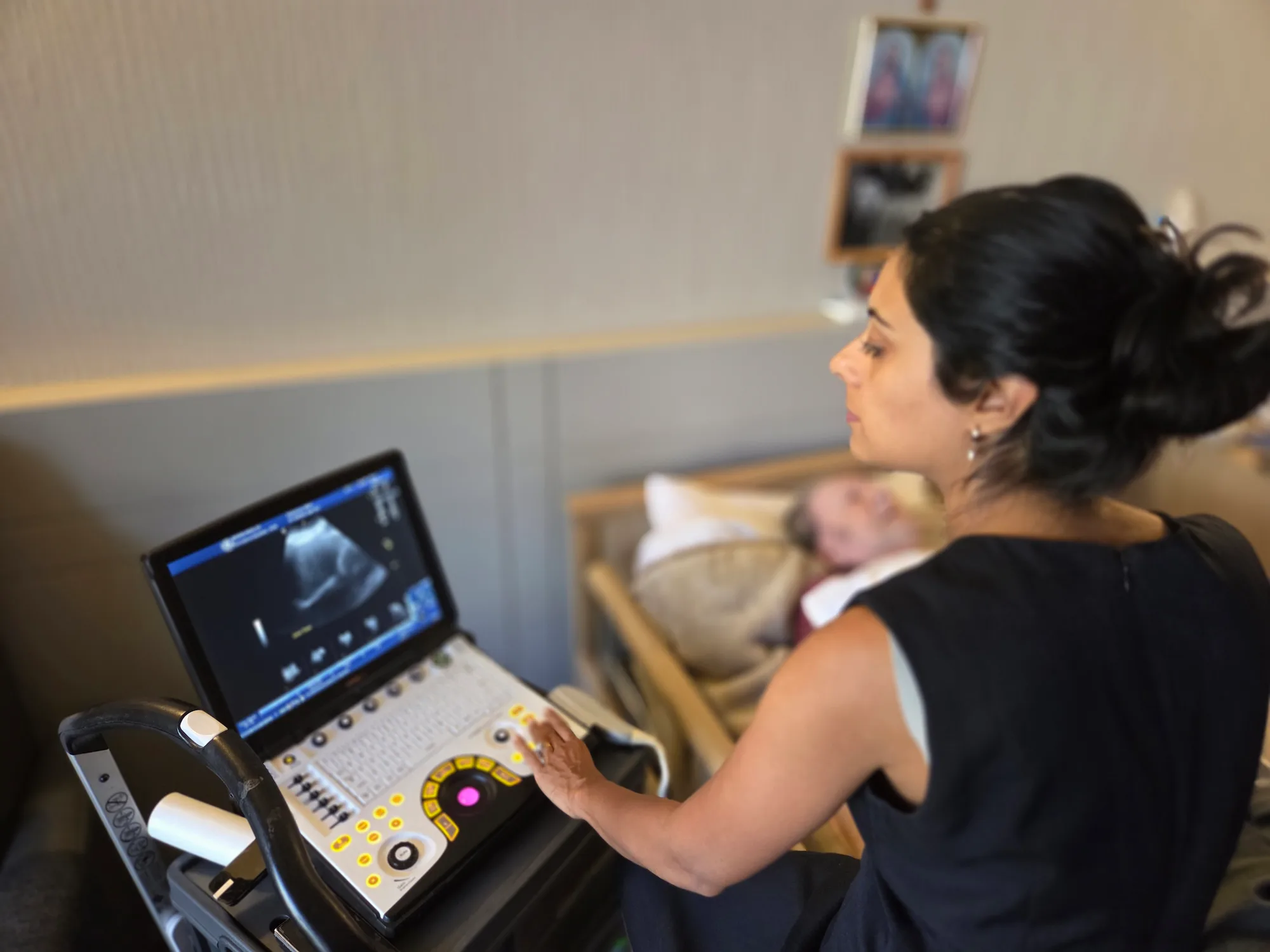
What Changes When Imaging Comes to You
Here's what a typical day looks like when your facility has mobile imaging available.
A Day in the Life: Mobile Imaging Timeline
10:00 AM: The GP rings, Mrs. Chen needs an X-ray after last night's fall.
10:05 AM: You book online in around two minutes, or you ring us directly. We confirm we'll be there within 6 to 48 hours based on clinical priority.
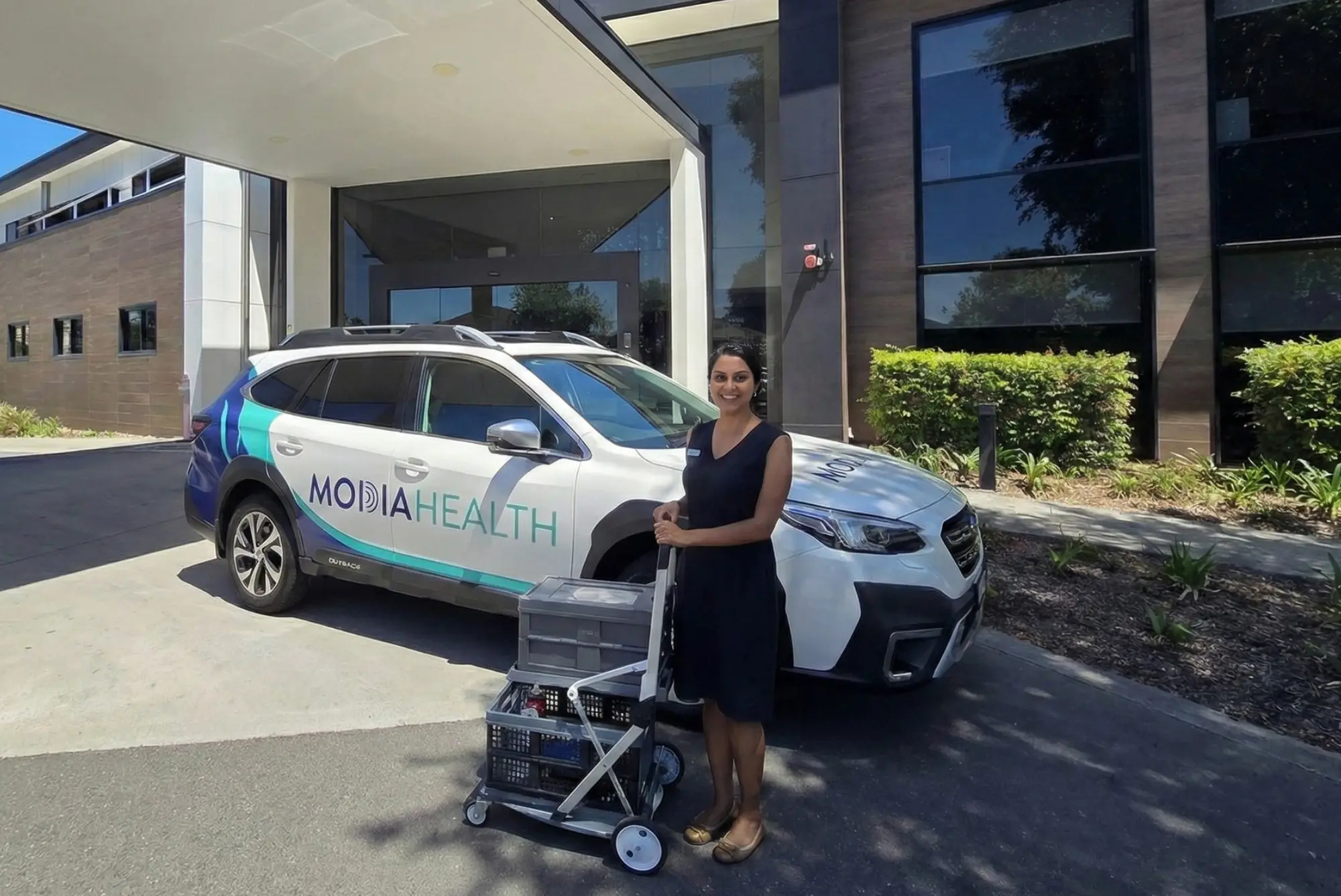
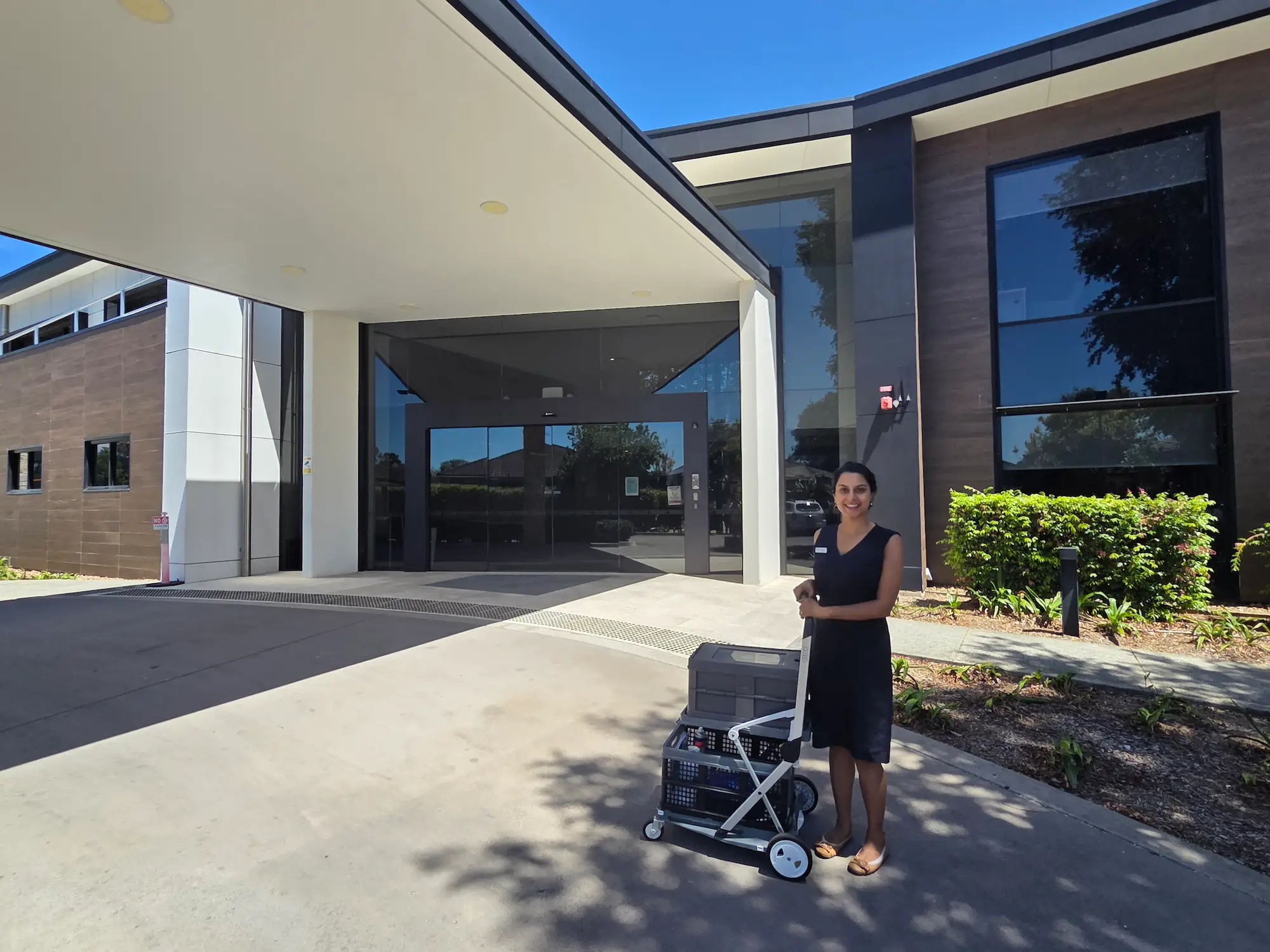
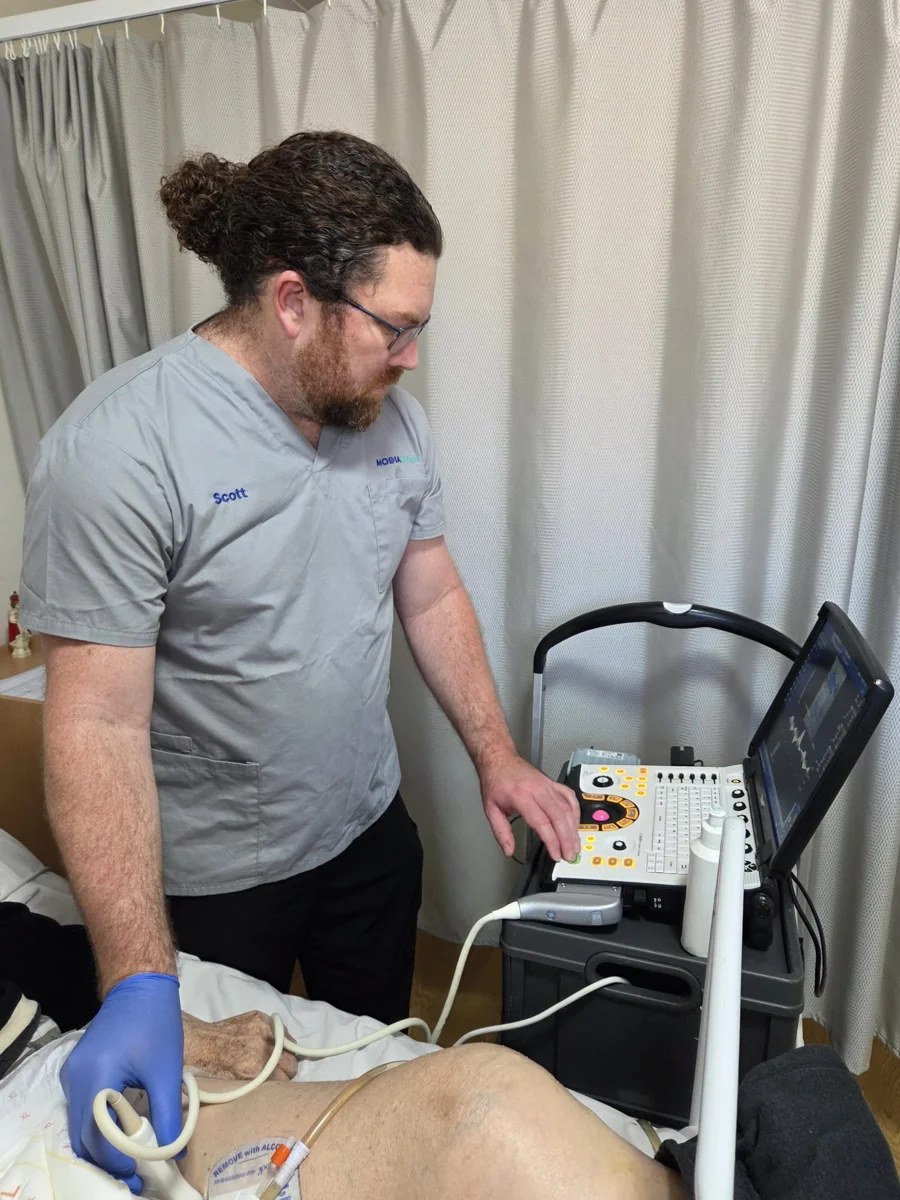
2:00 PM: The mobile radiographer arrives with portable equipment, which is a backpack and a couple of stands for X-ray, or a laptop-sized ultrasound machine if one is requested.
2:15 PM: The radiographer arrives already prepared for Mrs. Chen's specific needs, because we gathered her cognitive status and mobility requirements during booking and the team knows what to expect.
2:20 PM: The scan happens in Mrs. Chen's room. She can stay in her chair or bed. Her favourite nurse holds her hand. She's calm because she's in familiar surroundings.
2:35 PM: Scan complete. Mrs. Chen is settled. Your staff stayed on the floor. There's no coordination chaos and no phone tag.
3:00 PM: Images are already being reviewed by the radiologist. Results will be with the GP within 24 hours, often the same day for urgent cases.
What Just Happened Differently?
- Zero staff members pulled off-floor, compared to two for 4 to 6 hours
- Zero transport coordination, with no ambulance booking and no family escort calls
- Zero resident distress from travel, with no confusion, agitation, or transfer pain
- Zero evening shift chaos from managing a resident who came back worse than they left
- One simple booking that saved your facility 8 to 12 staff hours and delivered better care
This is what's possible when healthcare adapts to your workflow rather than the other way around.
Does your resident need to stay in their chair? The ultrasound scan for a suspected DVT actually works better in a seated position, because gravity helps blood pool in the calves for clearer visualisation.
What about a resident who can't sit up? The radiographer adjusts the bed height and angle to do the X-ray without causing pain.
What about a resident with dementia who needs their trusted carer present? That's built into the process, because mobile providers understand aged care realities.
Why This Matters for Your Most Vulnerable Residents
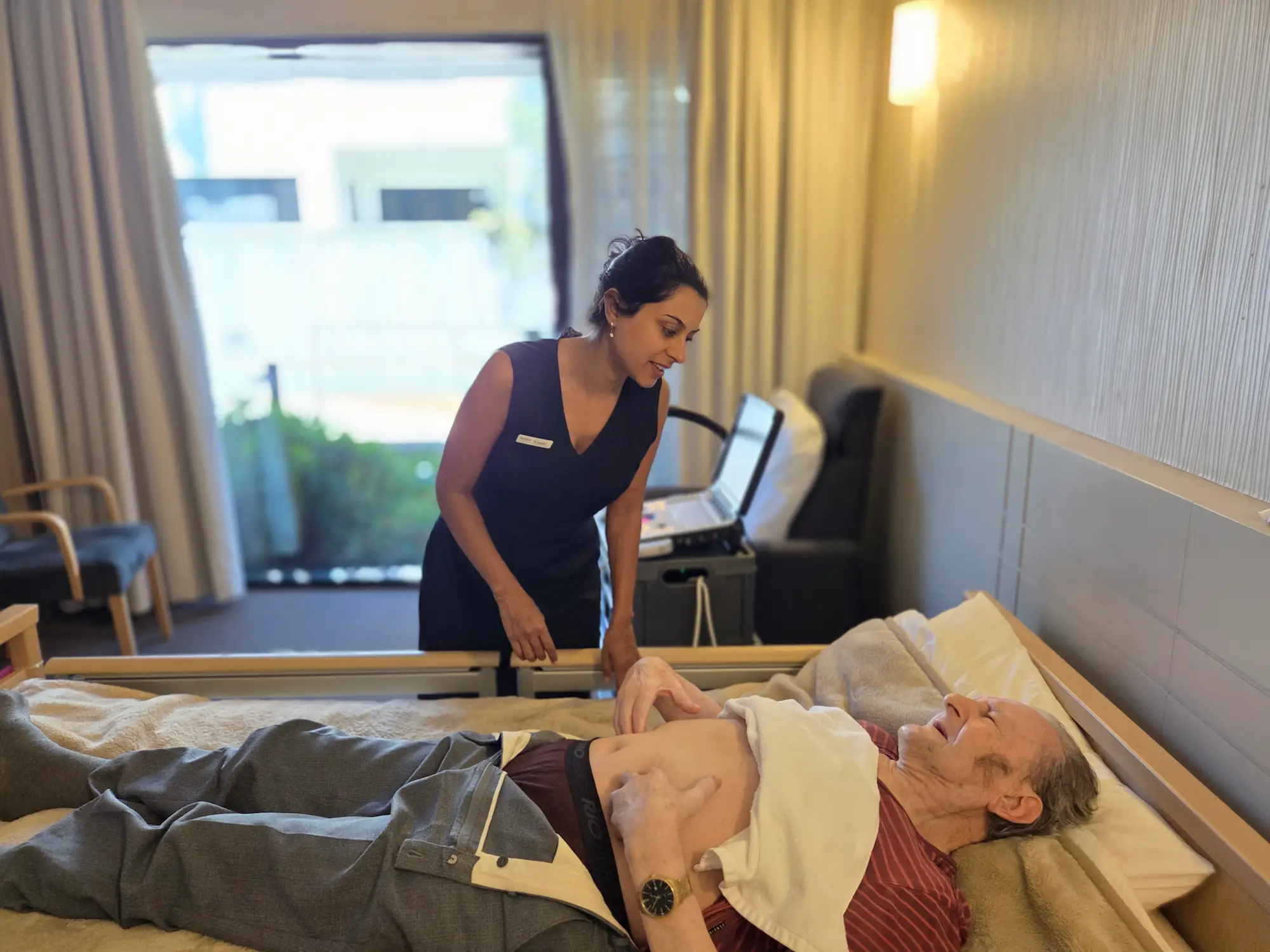
Think about your residents with cognitive impairment. They're frightened of strangers, they get agitated in unfamiliar places, and they need specific staff members they trust.
For them, a hospital visit means multiple strangers asking questions, bright lights and loud noises in waiting rooms, staff changing shifts mid-visit, dark radiology rooms with unfamiliar equipment, and hours of escalating confusion.
Compare that to mobile imaging: they stay in their own room, their familiar staff remain present, one new person arrives (who your staff trusts), the procedure takes around 30 minutes, and they return to their routine immediately.
Our mobile sonographers see this difference every shift. Residents who would be agitated and combative in a hospital setting stay calm when the team comes to them. The nurse they trust holds their hand through the whole procedure, and the relief on their face when they realise they're not going anywhere is part of why we do this work.
Mobile imaging prevents that harm before it starts.
Why Speed Matters (And Why Mobile Is Actually Faster)
Worth comparing timelines, because you need answers quickly to manage residents effectively.
Traditional Hospital/Clinic Route
- Hours 0 to 2, ambulance booking and waiting (if it arrives on time)
- Hours 2 to 3, transport to hospital
- Hours 3 to 9, waiting in ED or clinic queue for an imaging slot
- Hours 9 to 10, the scan happens
- Hours 10 to 11, transport back to facility
- Hours 11 to 13, settling a distressed resident
- Hours 24 to 48, waiting for results to reach the GP
Total: up to 48 hours of uncertainty, 10 or more hours of active staff time, and one exhausted resident.
Mobile Imaging Route
- Day 0 (Morning), GP orders imaging and you book online or by phone in around two minutes
- Day 0 to 2, mobile team scheduled based on clinical priority (typically 6 to 48 hours)
- Appointment Day, mobile radiographer arrives at your facility with portable equipment
- 15 to 30 minutes, scan completed in the resident's own room without transfers and without stress
- Within 24 to 48 hours, images reviewed by the radiologist and report sent to the GP
Total impact on your facility: two minutes booking plus 15 to 30 minutes of scan supervision. Resident stays comfortable in familiar surroundings. Results delivered within standard timeframes.
When a resident has a suspected fracture, DVT, or pneumonia, every hour matters. Delayed diagnosis can mean delayed pain management and a higher risk of medical complications.
With mobile imaging, you get answers faster. And here's the important part: when mobile imaging shows the resident does need hospital care, they go with actual diagnostic information rather than "possible fracture, query DVT". They skip triage bottlenecks and go straight to appropriate treatment.
Mobile imaging doesn't replace hospitals. It makes hospital transfers more strategic and effective when they're genuinely necessary.
See the difference yourself. Explore our mobile ultrasound services or learn about mobile X-ray options.
What Aged Care Staff Tell Us
Read real stories"I Didn't Know This Was Even Possible"
One of the most common reactions from nursing staff is "Where are we taking her for the scan?"
When the team explains it's happening right there in the resident's room, you can see the relief wash over them. There's no coordination chaos, no pulling staff off-floor, and no dreading the evening shift when the resident returns agitated.
One nurse said: "You've just saved me four hours of my shift, and more importantly, you've saved my resident from an awful day."
"The Family Was So Grateful"
Care coordinators tell us that families are amazed when they learn imaging can happen on-site. One family specifically requested our services because their mother "just doesn't do well in the hospital" and has cognitive impairments that mean she always comes back worse than she went in.
The family didn't have to take time off work or sit in waiting rooms for hours. They could actually spend that time visiting their mother rather than rushing around to medical appointments when she's unwell.
"My Resident Actually Hugged Her"
This is one of the most rewarding parts of mobile imaging work. When residents realise they're not going anywhere, that the scan is happening right there in their room, their whole body relaxes.
One resident with dementia who rarely trusts anyone stayed calm throughout her entire chest X-ray because we made sure her favourite nurse was there to hold her hand. Another resident hugged the radiographer afterwards and said, "I'm so thankful that a service like this exists."
These moments matter. When your residents are calm and comfortable, your whole shift goes better. When they're distressed and agitated after a hospital transfer, everyone suffers, including the resident, their roommate, the floor, and you.
When to Use Mobile Imaging (And When Not To)
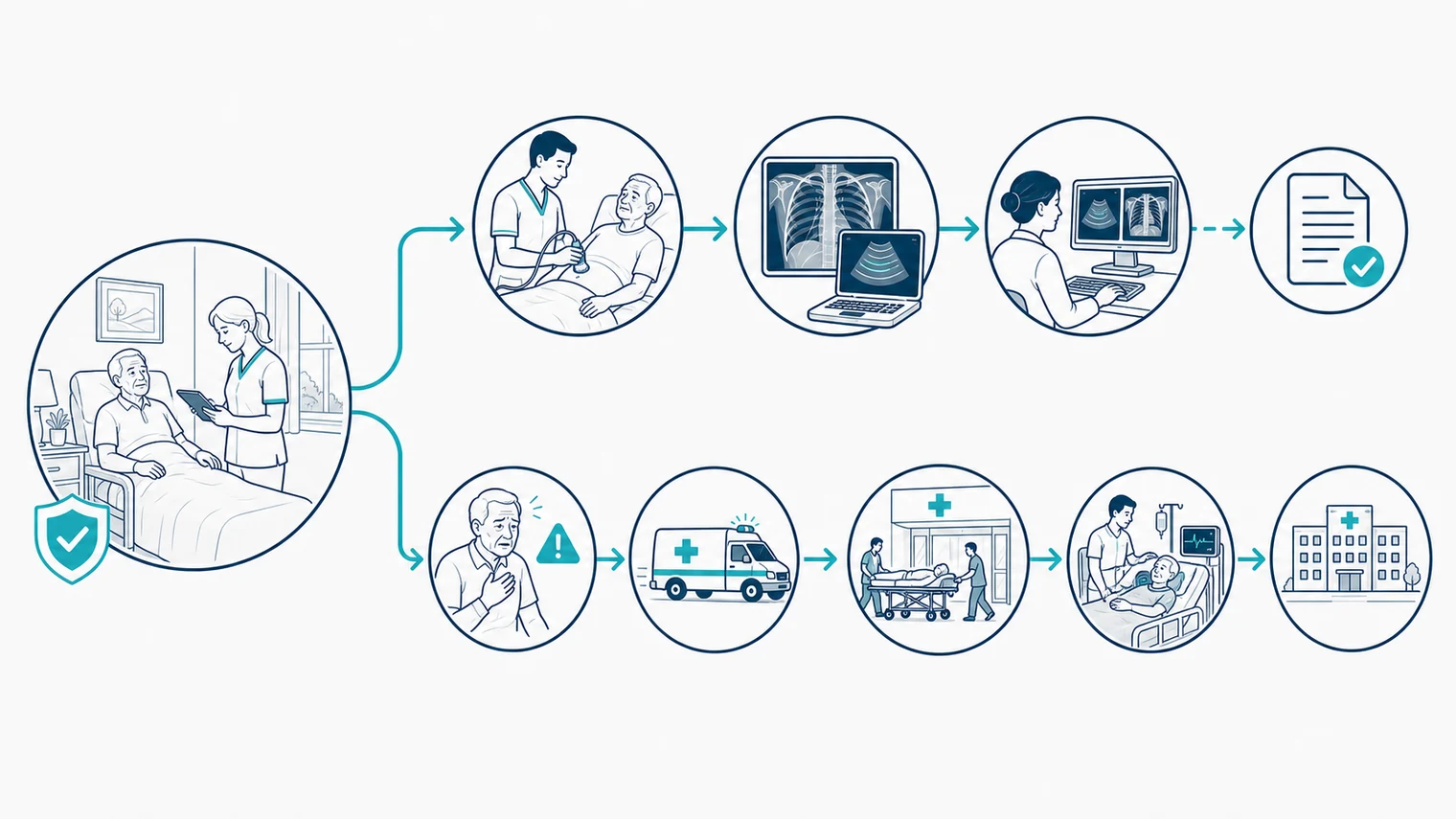
Clinical Decision Guide: Mobile Imaging vs. Hospital Transfer
See which cases work bestMobile Imaging Is Your Best Tool For:
- Post-fall assessments, query fractures, hip or wrist injuries (X-rays without the pain of multiple transfers)
- Suspected DVTs, leg swelling especially in residents with limited mobility (ultrasound can be done in their chair for better imaging)
- Respiratory concerns, persistent cough, suspected pneumonia, monitoring chest infections
- Abdominal pain, checking for gallstones, urinary obstruction, bowel issues
- Unexplained symptoms, weight loss, weight gain, lumps that need investigation
- Ongoing monitoring, following up on known conditions without repeated hospital visits
These are your bread-and-butter aged care presentations, the ones you see every week. Research shows that 40 to 55% of aged care ED transfers are potentially avoidable, and many of these fall into the category above.
When Hospital Transfer Is Still the Right Call:
- Suspected cervical neck injuries, which need immobilisation and specialist trauma care immediately
- Acute emergencies, like active blood loss, severe respiratory distress, or other life-threatening presentations
- Time-critical surgical cases, like neck of femur fractures requiring same-day surgery
- Cases where clinical assessment clearly indicates hospital-level care is needed
Here's the key difference in your approach: with mobile imaging, when residents do need hospital care, they go with actual diagnostic information.
Instead of an 87 year old with a fall and query fracture sitting in ED triage for hours, they arrive with "confirmed radial fracture, images available" and go straight to appropriate treatment.
Mobile imaging makes your referrals more strategic, your clinical management faster, and your hospital transfers more effective when they're genuinely necessary.
How to Make This Happen in Your Facility
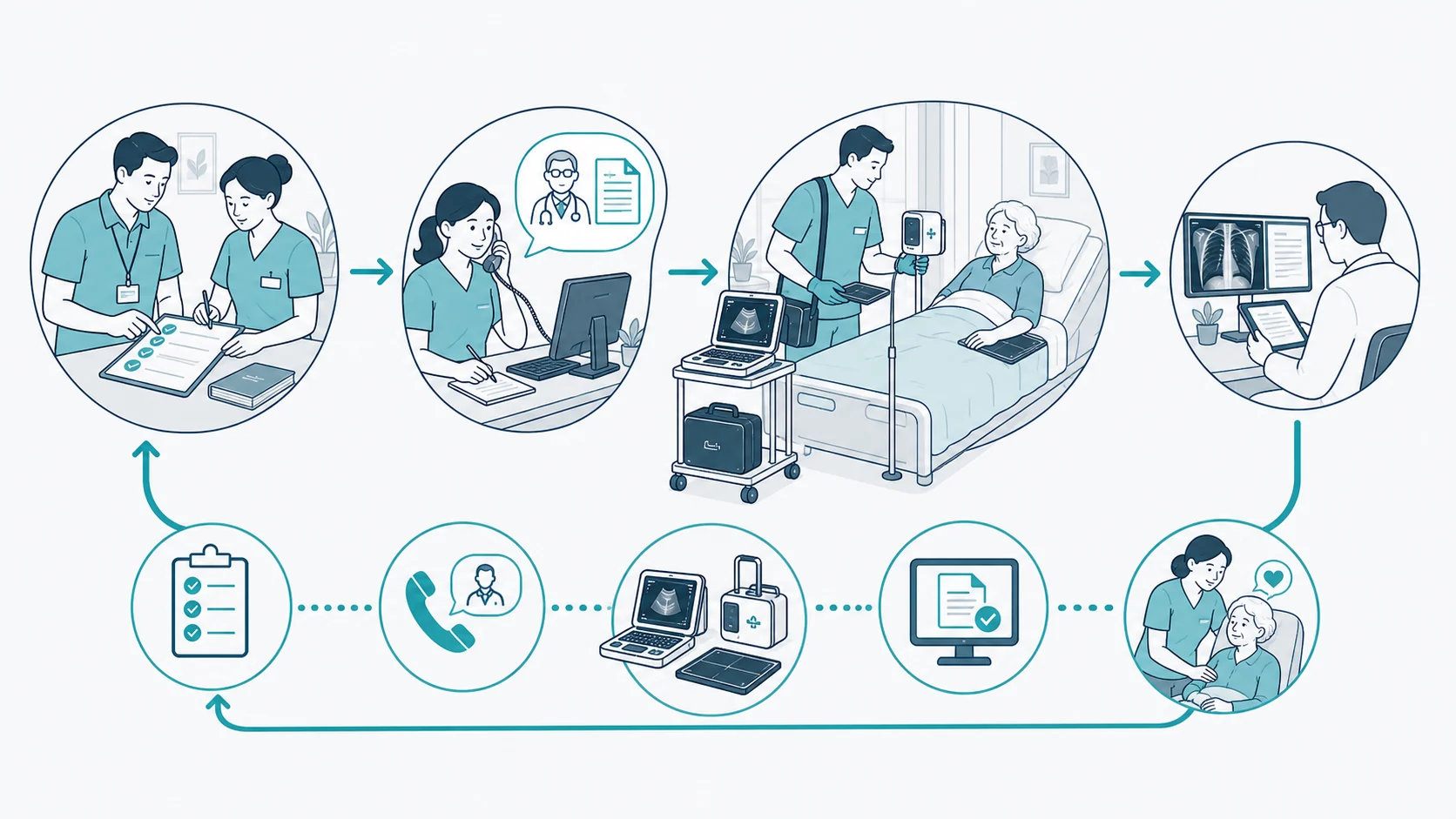
Your Roadmap to Implementation
See how to get startedStep 1: Start the Conversation with Your Clinical Manager
You don't need permission to suggest improvements. Bring data:
- "Research shows 40 to 55% of aged care ED transfers are potentially avoidable, and many are for basic imaging needs."
- "Each transfer costs us 8 to 12 staff hours, not counting overtime and the impact on our other residents."
- "Modia Health offers mobile X-ray and ultrasound with 6 to 48 hour turnaround. Imagine eliminating those exhausting hospital transfers."
Frame it as solving problems your facility already has: staff shortages, resident distress, family complaints, and inefficient resource use.
Step 2: Getting Started with Modia Health
Here's what makes working with us different from traditional imaging clinics:
Our Online Portal Makes Booking Effortless
There's no phone tag and no waiting on hold. Book directly through our aged care portal in under two minutes. You enter the resident details, upload the referral, and you're done. We handle the rest.
We Gather Critical Information Upfront
During booking, we ask about your resident's cognitive status, mobility needs, and any special considerations. The radiographer arrives already prepared, with no awkward surprises or improvising at the bedside.
Transparent Pricing, No Hidden Fees
Our fees are clearly displayed during booking. Families know exactly what to expect before we arrive. There are no surprise bills and no confusion.
Fast Turnaround Times
Images are reviewed by our radiologists and reports sent to GPs within 24 to 48 hours. For clinically urgent cases through CAREPACT, we prioritise even faster.
Direct Communication When You Need It
You can reach us directly, without going through multiple departments or waiting days for callbacks. When you have questions, you get answers.
Step 3: Your First Booking
Start with a straightforward case, perhaps a routine chest X-ray or a follow-up ultrasound. This lets your team see how smoothly the process works without the pressure of a high-stakes situation.
What you'll need:
- GP referral (we accept electronic referrals)
- Resident's wing and room number
- Brief notes on mobility and cognitive status
That's it. We'll confirm the appointment, arrive at the scheduled time with all necessary equipment, complete the scan in the resident's room, and send results directly to the GP.
Step 4: Share with Your Team
Once you've experienced how smoothly it works, spread the word:
- Show your nursing team our online portal so they can bookmark it for quick access
- Share our contact details for direct phone bookings if they prefer
- Let them know typical timeframes: 6 to 48 hours for scheduling, 15 to 30 minutes onsite, 24 to 48 hours for results
- Emphasise that we ask about resident needs upfront, so they don't need to worry about explaining complex care requirements on the spot
Most facilities find that once one or two nurses experience the process, word spreads quickly. "Did you know you can just book mobile imaging online?" becomes common knowledge within weeks.
Step 5: Advocate for Mobile-First Thinking
You have a voice in the aged care sector. Use it:
- Encourage your GPs to consider mobile imaging as their first-line referral for residents with mobility barriers or hospital anxiety
- Share your positive experiences at staff meetings and with clinical leadership
- Discuss it with your professional networks and nursing associations
- Advocate for mobile diagnostics to be included in government support programs
The more healthcare professionals normalise mobile imaging, the faster it becomes standard practice across Greater Brisbane and surrounding regions and beyond.
Ready to eliminate those exhausting transfers?
Book your first appointment in minutes through our online portal, or reach out if you have questions. We're here to make your job easier.
You Deserve Systems That Support Your Work, Not Fight Against It
If you're reading this as an aged care nurse, carer, or clinical coordinator, you already know the gap between the care you want to provide and what the logistics allow.
You became a healthcare professional to help people, not to spend hours coordinating ambulances, watching residents deteriorate from processes that were supposed to help them, or fielding angry family calls about why Mum came back worse than she left.
Mobile imaging doesn't just make residents' lives better. It makes your job possible.
When facilities report back after taking on mobile imaging partnerships, here's what they tell us:
- "Our staff overtime dropped significantly because we're not constantly covering for escorts."
- "Family complaints about resident distress after appointments basically disappeared."
- "Our GPs love it. They get faster results and can manage residents more effectively."
- "The nurses say it's like finally having someone who understands our reality."
- "We're keeping residents out of ED for things that should never have required hospital admission."
This isn't about replacing hospitals or avoiding necessary care. It's about giving you the tools to provide excellent care without fighting systems designed for a different era.
The healthcare system is slowly catching up. Hospital-in-the-home programs are expanding. The Aged Care Act recognises that care should happen where people live. Mobile diagnostics are becoming standard infrastructure.
But change happens faster when frontline staff like you speak up.
If your facility is reviewing how it handles imaging requests, talk with us about which scans can be done on site.
Ready to Change How Your Facility Manages Diagnostic Imaging?
At Modia Health, we understand your reality because we work in it every day. We've built our mobile imaging service around aged care workflows, resident needs, and the challenges you face on every shift.
What Makes Modia Health Different
- We Ask About Your Residents First. Before we arrive, we want to know about cognitive status, mobility requirements, and behavioural considerations. This preparation is mandatory because it makes the difference between a smooth scan and a difficult one.
- We Work on Your Timeline. Same-day service for urgent cases, 24 to 48 hour turnaround for routine imaging. When you book, you know when we're coming.
- Your Staff Can Book Directly. Simple online booking or a dedicated phone line, with no endless phone tag. You get confirmation immediately.
- We Integrate with Queensland Health. Our partnership with CAREPACT means urgent cases get prioritised, images are viewed in real time, and clinical management happens straight away.
- Transparent Pricing, No Surprises. Families know the fee upfront. There are no hidden costs and no billing surprises that create complaints for your team.
- Results Within 24 to 48 Hours. GPs and your clinical team get reports fast, so treatment can start without delay.
- Hospital-Quality Imaging With an Aged-Care-Friendly Process. Our radiologists have acute hospital experience and our sonographers and radiographers understand aged care. It's the best of both worlds.
Related Articles
About This Article
This article was prepared by the Modia Health team in consultation with mobile sonographers and aged care nursing staff who experience the challenges of resident transport daily.
Modia Health works in partnership with Queensland Health's CAREPACT program, providing mobile diagnostic imaging that keeps potentially avoidable ED presentations out of hospital and enables safer, faster, more dignified care for aged care residents across Greater Brisbane and surrounding regions.
*This article is intended for general information and educational purposes for aged care professionals. All clinical scenarios are based on real experiences, with identifying details changed to protect patient privacy. Mobile imaging should always be used in consultation with medical professionals and appropriate clinical assessment.*


