
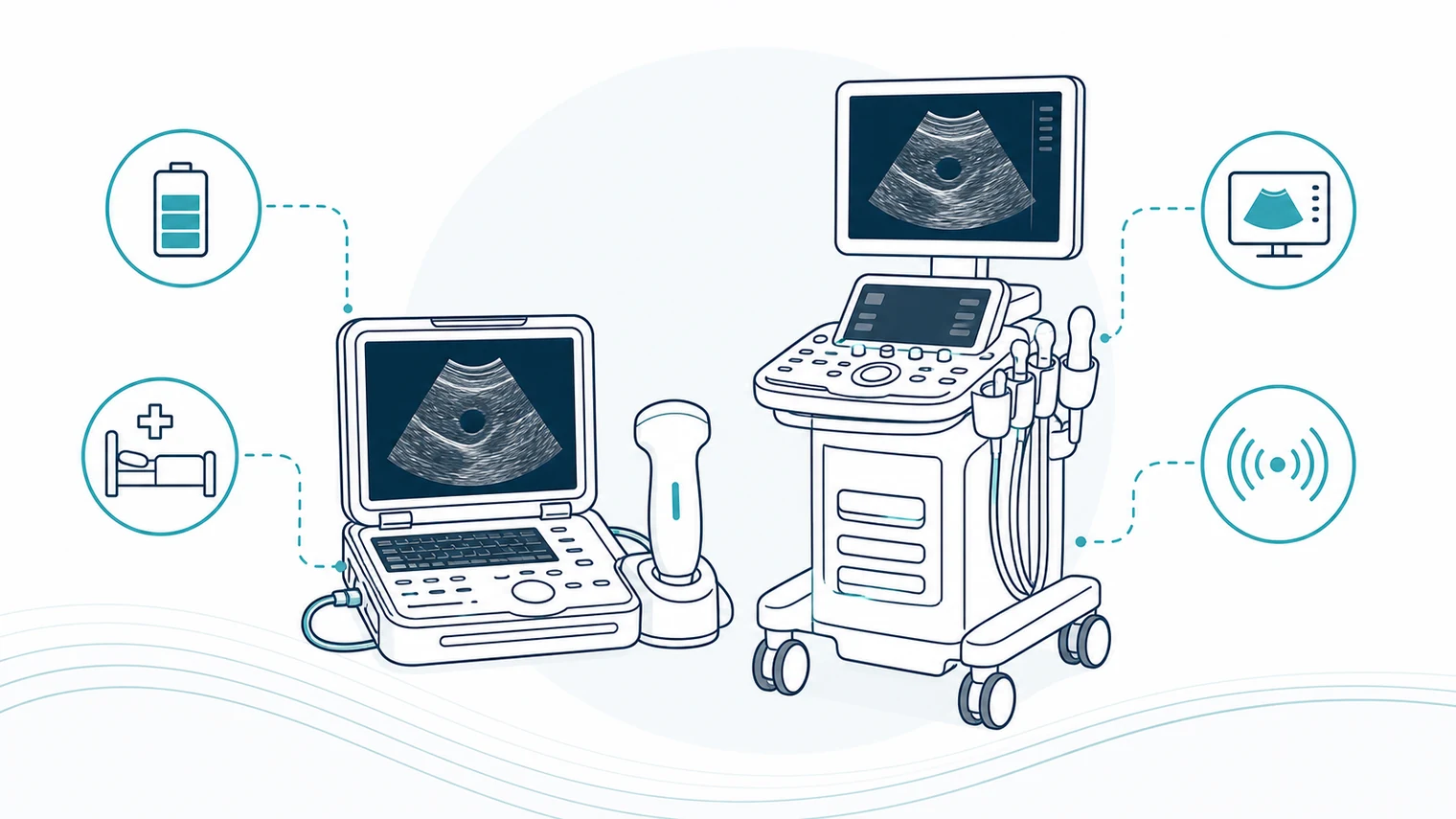
Portable ultrasound machines, and point-of-care ultrasound (POCUS) devices in particular, have reshaped diagnostic imaging by bringing capable scanners right to the patient. They go to the bedside, into remote communities, into disaster zones and into emergency situations. You'll find them across almost every medical specialty now.
Key Takeaways
- Cost Savings: Handheld devices cost $1,000-$12,000 vs. $30,000-$50,000+ for traditional systems
- Clinical Impact: POCUS reduces treatment time by up to 5 hours in emergency settings
- Diagnostic Accuracy: 96% accuracy for cardiac ejection fraction, 97.6% for pericardial effusion
- Market Growth: Global portable ultrasound market projected to exceed $6.8 billion
- Safety Advantage: Zero ionising radiation exposure compared to CT scans and X-rays
- Accessibility: Devices weigh as little as 147-390 grams and fit in a pocket
Important Implementation Note
Portable ultrasound brings real benefits, but using it well means dealing with real limits too. Image quality has constraints, training takes time, and regulatory questions need answers. Portable scanners work best as a complementary diagnostic tool, not a substitute for a full formal ultrasound study.
Experience professional portable ultrasound technology - Book your mobile ultrasound with certified sonographers today!
What Are Portable Ultrasound Machines?
Portable ultrasound machines are compact, lightweight imaging devices that give real-time diagnostic capability outside the traditional clinic room. Unlike large cart-based systems, which need dedicated imaging spaces and can cost more than $50,000, portable devices have opened up diagnostic access right across healthcare.
The Portability Spectrum: From Pocket to Cart
| Device Type | Weight | Price Range | Best Use Cases |
|---|---|---|---|
| Handheld Devices | 147-390g | $1,000-$5,000 | Emergency assessment, home visits, rural healthcare |
| Tablet-Connected Probes | < 500g | $3,000-$8,000 | Telemedicine, remote consultation, mobile clinics |
| Laptop-Style Systems | 2-5kg | $5,000-$15,000 | ICU, operating rooms, ambulances |
| Cart-Based Portables | 20-40kg | $15,000-$30,000 | Hospital wards, multi-department use |
| Traditional Cart Systems | 100-200kg | $30,000-$50,000+ | Full studies, specialised imaging |
Modern Portable Technology Features
- Wireless Connectivity: 4G/5G integration for real-time telemedicine consultation
- AI Integration: Automated measurements, image clean-up, and real-time guidance
- Extended Battery Life: 1.5 to 4 hours of continuous scanning
- Cloud-Based Systems: DICOM compatibility for image archiving and sharing
- Dual-Frequency Probes: Full-body imaging from a single transducer
- HIPAA-Compliant Security: One-click de-identification and encrypted data storage
Full Benefits of Portable Ultrasound Machines
Documented Clinical Impact
Research shows portable ultrasound delivers measurable gains across several healthcare metrics:
- Time Savings: Treatment time reduced by 5 hours compared with 24-hour delays in conventional imaging pathways
- Cost Efficiency: A single POCUS-confirmed deep vein thrombosis saves $1,500-$2,000 in emergency care costs
- Patient Satisfaction: 78% of patients report high satisfaction with portable ultrasound examinations
- Provider Confidence: 98% of residents report greater clinical confidence after POCUS training
Emergency and Critical Care Applications
Portable ultrasound has become hard to do without in emergency medicine, where a fast diagnosis directly affects outcomes and survival.
Proven Diagnostic Accuracy in Emergency Settings:
- FAST Protocol (Trauma Assessment):
- 81% sensitivity for detecting free intra-abdominal fluid in blunt trauma
- 100% specificity for trauma-related fluid detection
- Removes the delay of moving a patient to radiology
- Shock Evaluation Accuracy:
- 90% sensitivity and 95% specificity for hypovolaemic shock
- 95% sensitivity for pulmonary embolism detection
- 100% sensitivity for cardiac tamponade identification
- Pulmonary Embolism Diagnosis:
- Multi-organ POCUS shows 90% sensitivity and 69% specificity
- Rapid bedside assessment removes CT scan delays
- Particularly useful in haemodynamically unstable patients
- Pre-Hospital Care: Ambulance-based POCUS allows diagnosis and triage before the patient arrives at hospital
Home Healthcare and Aged Care Revolution
Portable ultrasound changes care delivery for patients with mobility limits, chronic conditions, and anyone who'd rather be seen at home.
Patient-Centred Benefits:
- No transport barriers: Serves patients who can't travel because of disability, frailty or medical instability
- Less anxiety: A familiar home environment lowers stress and helps the patient cooperate
- Infection control: Cuts hospital exposure risk, which matters most for immunocompromised patients
- Family participation: Loved ones can be there during the scan
- Continuity of care: Makes regular monitoring possible without repeated trips to a facility
- Cost savings: Removes transport expenses and reduces the need for hospital admissions
Real-World Impact: Aged Care Case Study
Professional mobile ultrasound in aged care facilities delivers real clinical and operational gains:
- Prevents unnecessary hospital transfers for frail residents
- Enables early detection of conditions like urinary retention, gallstones, and fluid collections
- Reduces emergency department presentations by providing bedside diagnostics
- Improves resident comfort by removing stressful facility transfers
Better Access for Rural and Remote Healthcare
Portable ultrasound helps close the healthcare gap in isolated and resource-limited communities.
Documented Outcomes in Remote Settings:
- Maternal and Neonatal Health:
- Community health workers using portable ultrasound reach 99% agreement with expert sonographers in obstetric assessments
- Potential to prevent 6.3% of maternal deaths and 14.6% of neonatal deaths through earlier detection
- Allows pregnancy confirmation, fetal positioning, and amniotic fluid checks
- Closing the Geographic Gap: Brings diagnostic imaging to communities that don't have a radiology service
- Tele-Mentored Systems: Remote GPs deliver high-quality ultrasound with real-time expert guidance over 4G/5G networks
- Multi-Clinic Deployment: A single portable device shared across multiple remote clinics gets used to the full
- Better referral targeting: Stronger clinical assessment cuts unnecessary patient transfers to distant hospitals
Broader Economic Advantages
Past the purchase price gap, portable ultrasound generates real operational savings and new revenue chances.
| Cost Factor | Portable Ultrasound | Traditional System | Savings |
|---|---|---|---|
| Initial Purchase | $1,000-$12,000 | $30,000-$50,000+ | 70-90% lower |
| Facility Infrastructure | No dedicated room needed | Dedicated imaging suite required | Removes construction costs |
| Per-Exam Transportation | $0 (device travels) | $50-$200+ per patient | 100% removal |
| Emergency DVT Diagnosis | Immediate bedside confirmation | ED visit + formal imaging | $1,500-$2,000 saved |
| Annual Facility Savings | 10% reduction in unnecessary testing | Baseline costs | $56,000/year potential |
Additional Financial Benefits:
- Shorter hospital stays: Earlier diagnosis speeds up discharge planning
- Fewer unnecessary referrals: Bedside assessment removes many specialist consultations
- Lower emergency care costs: Median savings of $71.80 per discharged patient, $138.90 for symptomatic patients
- New revenue streams: Primary care practices can offer imaging services that previously required a referral
- Higher patient throughput: Faster diagnosis means more patients seen without expanding the facility
No Ionising Radiation Exposure
Unlike CT scans and X-rays, portable ultrasound produces no ionising radiation. That makes it the preferred first-line diagnostic tool for vulnerable patient groups.
Safety Advantages for High-Risk Groups:
- Pregnant Patients: No fetal radiation exposure across all trimesters
- Paediatric Populations: Removes long-term cancer risk from cumulative radiation
- Patients Needing Serial Imaging: Safe for repeat examinations with no radiation dose to worry about
- Breast Imaging: No mammographic radiation exposure for younger women with breast concerns
Broad Clinical Applications Across Specialties
Modern portable ultrasound serves virtually every medical discipline with documented diagnostic accuracy.
Specialty-Specific Applications:
- Cardiology: 96% accuracy for reduced ejection fraction detection, 97.6% accuracy for pericardial effusion
- Obstetrics: Pregnancy confirmation, fetal positioning, amniotic fluid assessment, basic anatomical surveys
- Critical Care: Fluid status, cardiac function monitoring, pulmonary oedema and pneumothorax detection
- Procedural Guidance: Ultrasound-guided vascular access reduces first-attempt failure rates compared with landmark techniques
- Musculoskeletal Medicine: Joint effusion detection, ligamentous injury assessment, soft tissue evaluation
- Urology: Bladder volume measurement, hydronephrosis screening, kidney stone detection
- General Surgery: Abdominal assessment, gallbladder evaluation, appendicitis screening
Full Limitations of Portable Ultrasound Machines
Critical Understanding Required
Portable ultrasound brings substantial clinical value, but using it well means being honest about its limits. Healthcare organisations need to tackle these constraints through proper training, quality assurance, and clear scope-of-practice rules.
Technical and Image Quality Limitations
Even with big technology gains, portable devices still measure differently against high-end cart-based systems.
Documented Image Quality Constraints:
- Resolution and Detail: Comparative studies rate handheld image quality as "good" but consistently behind mid-range and premium ultrasound systems
- Penetration Depth: Reduced imaging depth particularly affects:
- Obese patients who need deeper tissue visualisation
- Deep abdominal structures in larger body habitus
- Cardiac imaging through challenging acoustic windows
- Field of View: A narrower visualisation area, compared with traditional systems, limits broad anatomical assessment
- Frequency Options: Fewer specialised transducers available for specific clinical applications
- Processing Power: Limited advanced imaging modes, including:
- Harmonic imaging for better tissue characterisation
- Contrast-enhanced ultrasound studies
- Advanced Doppler applications
- 3D/4D reconstruction capabilities
Challenging Scanning Conditions:
- Air-filled organs (bowel gas interference)
- Bone interfaces limiting acoustic penetration
- Patients with limited cooperation or positioning constraints
- Surgical dressings or wound coverage limiting probe access
Diagnostic Accuracy and Clinical Limitations
POCUS shows high sensitivity for many conditions, but specificity varies a lot, and some clinical scenarios still need traditional imaging systems.
Diagnostic Performance Variability:
| Clinical Application | Sensitivity | Specificity | Clinical Implications |
|---|---|---|---|
| Ejection Fraction | 96% | 90% | Excellent for screening, some false negatives |
| Pericardial Effusion | 97.6% | High | Highly reliable for detection |
| Pneumothorax | Low | Moderate | Additional imaging often required |
| Aortic Aneurysm | Low | Variable | CT angiography remains gold standard |
| Endotracheal Tube Placement | Moderate | 59% | Higher false-positive rates from artefacts |
| Hydronephrosis | Low-Moderate | Variable | Depends on operator experience |
Constraints Requiring Traditional Systems:
- Complex Cardiac Studies: Full echocardiograms with detailed valve assessment and quantitative measurements
- Detailed Obstetric Imaging: Complete fetal anatomy surveys, detailed structural assessments
- Deep Abdominal Studies: Full evaluation in larger patients or complex pathology
- Specialised Procedures: Image-guided biopsies and complex interventions that need advanced visualisation
- Image Storage Capacity: Less local storage limits full examination documentation
- Measurement Precision: Less precise for detailed quantitative measurements than premium systems
Training and Competency Challenges
The lack of standardised training is a major barrier to safe and effective POCUS use.
The Training Gap Crisis
73% of Canadian physicians do not use POCUS due to insufficient training
There's no international consensus on the training level needed for safe portable ultrasound operation and interpretation, which creates wide variability in practitioner competency.
Training-Related Limitations:
- No Standardised Curriculum: Training requirements vary widely across institutions, regions and countries
- Operator Experience Matters:
- Big diagnostic accuracy differences between expert and novice sonographers
- Advanced POCUS-trained providers show substantially lower false-positive and false-negative rates
- Brief training courses produce adequate results for focused applications but fall short for full assessment
- Skill Maintenance: Without regular use and ongoing practice, practitioners struggle to keep their scanning skills sharp
- Interpretation Errors: Most mistakes come from:
- Incomplete anatomical visualisation
- Misreading non-specific ultrasound findings
- Limited understanding of ultrasound artefacts
- Scanning uncooperative or difficult patients
- Cognitive Bias: What an operator expects to see can colour interpretation and clinical decisions
Operational and Equipment Challenges
Battery and Power Limitations:
- Limited Continuous Operation: Battery life runs 1.5 to 4 hours, which may not be enough for an extended clinical session
- Charging Infrastructure: Rural and remote settings may not have reliable electricity
- Battery Degradation: Performance drops over the device's lifespan
Durability and Maintenance Concerns:
- Transport Damage Risk: Compact devices are more vulnerable to drops, impacts and environmental exposure
- Expensive Probe Replacement: Transducers cost $500-$5,000; damage to an integrated handheld unit can take the whole system out of service
- Limited Repair Access: Resource-limited settings often lack technical support, spare parts and qualified service technicians
- Quality Control: Regular maintenance, calibration and periodic servicing are needed for consistent performance
Connectivity and Technology Dependence:
- Network Reliability: Cloud storage and telemedicine features need consistent high-bandwidth internet or a 4G/5G cellular signal
- Remote Area Limitations: Genuinely remote sites may not have the connectivity for real-time consultation or image transmission
- Asynchronous Interpretation Delays: Store-and-forward telemedicine creates diagnostic delays in urgent cases
Data Security and Regulatory Concerns
Portable ultrasound raises tricky regulatory compliance and patient confidentiality issues.
Privacy and Security Issues:
- Data Ownership Ambiguity: Confusion over who owns and controls patient images when multiple clinicians use personal or organisational devices
- HIPAA Compliance: Open questions about:
- Device security protocols and encryption standards
- Access control and authentication
- Automatic cloud backup that may compromise confidentiality
- Sharing sensitive information across practitioner networks
- Personal Device Usage: Concerns over device compatibility, technology currency and institutional data protection policies
Regulatory Framework Gaps:
- FDA Classification: Ultrasound devices need premarket approval as medical devices, but POCUS-focused regulations don't really exist
- International Variability:
- Canadian provinces set their own provincial requirements
- European nations apply different national guidance
- The United States lacks a unified POCUS-specific regulatory framework
- Quality Assurance Gaps: Many healthcare organisations don't have formal QA programs to evaluate:
- Image acquisition technique and quality
- Interpretation accuracy and diagnostic performance
- Clinical decision-making based on POCUS findings
- Systematic learning from diagnostic errors
- Credentialing Complexity: Without standardised credentialing pathways, privileging and scope-of-practice get complicated
Scope-of-Practice Limitations
Critical Clinical Distinction
Portable ultrasound devices are designed for focused examinations, not full diagnostic studies.
The Australasian College for Emergency Medicine position statement makes the point that handheld ultrasound devices should complement, not replace, conventional high-end radiology cart-based systems.
Inappropriate Use Risks:
- Trying to do a complete diagnostic workup on a portable device compromises diagnostic accuracy
- Missing subtle pathology that needs high-resolution imaging
- Inadequate tissue characterisation for complex lesions
- Insufficient anatomical detail for surgical planning
- Reduced medicolegal protection without full imaging documentation
Full Comparison: Portable vs. Traditional Ultrasound Systems
Knowing the specific advantages and trade-offs of each system type lets you pick the right technology for your clinical needs, patient population and operational context.
| Feature Category | Portable/Handheld | Traditional Cart-Based | Clinical Recommendation |
|---|---|---|---|
| Mobility & Portability | Excellent 147-390g handheld devices Pocket-portable Battery-operated | Limited 100-200kg systems Requires electrical outlet Difficult room-to-room transport | Portable for emergency, home care, rural settings |
| Image Quality | Good Adequate for focused exams Lower resolution Reduced penetration depth | Excellent Superior resolution Better penetration Advanced imaging modes | Traditional for full studies, complex pathology |
| Initial Cost | Lower $1,000-$12,000 No room renovation needed Minimal infrastructure | Higher $30,000-$50,000+ Dedicated imaging space Room setup costs | Portable for budget-conscious practices, pilot programs |
| Setup Time | Minutes Power on and scan Minimal preparation Battery-ready | Immediate (Once Installed) Always available in room No battery concerns Instant power-on | Portable for rapid response; Traditional for high-volume clinics |
| Advanced Features | Limited Basic Doppler Fewer imaging modes Limited transducer options | Full Full Doppler suite 3D/4D capabilities Contrast-enhanced imaging Multiple specialised probes | Traditional for cardiac, vascular, detailed obstetric studies |
| Diagnostic Scope | Focused Examinations FAST protocol Cardiac screening Basic assessments | Full Studies Complete organ evaluation Detailed anatomical surveys Quantitative analysis | Portable complements, doesn't replace full imaging |
| Patient Accessibility | Excellent Bedside imaging Home visits possible Rural deployment | Limited Patients must travel Fixed location Transportation barriers | Portable for mobility-limited, homebound, isolated patients |
| Telemedicine Integration | Native Support Cloud connectivity 4G/5G transmission Real-time consultation | Varies May require add-ons PACS integration Less portable sharing | Portable for remote expert consultation and mentoring |
| Training Complexity | Moderate-High Operator-dependent Limited quality feedback No standardised certification | Structured Formal sonography programs Supervised training Quality assurance protocols | Both need real training; Traditional has better established pathways |
| Maintenance | Variable Battery replacement Compact design limitations Limited repair access | Scheduled Vendor service contracts Modular components Preventive maintenance | Traditional has more established service infrastructure |
| Radiation Exposure | Zero Safe for all populations Repeated exams safe | Zero Safe for all populations Repeated exams safe | Both are radiation-free alternatives to CT/X-ray |
| Operational Costs | Lower No room costs Reduced staffing Battery maintenance | Higher Facility overhead Dedicated staff Higher electricity use | Portable for cost-sensitive operations |
Decision-Making Framework: When to Choose Each System
Best Portable Ultrasound Use Cases
- Emergency Medicine: FAST exams, trauma assessment, shock evaluation
- Point-of-Care Diagnostics: Rapid bedside clinical questions
- Home Healthcare: Mobility-limited patients, aged care residents
- Rural/Remote Medicine: Areas without radiology access
- Procedural Guidance: Vascular access, arthrocentesis, regional anaesthesia
- Basic Pregnancy Monitoring: Fetal heart rate, positioning, amniotic fluid screening
- Abdominal Screening: Gallbladder, kidney, liver, bladder assessment
- Musculoskeletal Imaging: Joint effusions, soft tissue evaluation
- Educational Settings: Training programs, anatomy instruction
When Traditional Systems Remain Necessary
- Full Cardiac Studies: Detailed echocardiography with valve quantification
- Complete Obstetric Imaging: Detailed fetal anatomy surveys, growth assessments
- Deep Abdominal Imaging: Complex pathology in larger patients
- Vascular Studies: Full venous or arterial Doppler examinations
- Breast Imaging: Targeted diagnostic mammography follow-up
- Thyroid/Small Parts: Detailed nodule characterisation
- Paediatric Specialised Studies: Hip dysplasia screening that needs precise measurements
- Guided Interventions: Complex biopsies and ablations that need advanced visualisation
Hybrid Approach: Combining Both Technologies
Many healthcare organisations get the best results by deploying both portable and traditional ultrasound systems together:
- Tiered Imaging Protocols: POCUS for initial assessment, traditional systems for full follow-up when indicated
- Location-Based Deployment: Portable devices for wards and emergency departments, cart-based systems in dedicated imaging suites
- Specialty-Specific Allocation: Portable for emergency and critical care, traditional for radiology, cardiology and obstetrics
- Training Progression: Learners move from focused POCUS applications to full ultrasound competency
Clinical Applications: Matching Technology to Need
Getting portable ultrasound right means knowing which clinical scenarios suit portable technology and which still need a traditional system.
Ideal Applications for Portable Ultrasound
| Clinical Application | Portable Ultrasound Advantages | Documented Outcomes |
|---|---|---|
| FAST Exam (Trauma) | Immediate bedside assessment No patient transport delay Rapid triage decision | 81% sensitivity, 100% specificity for free fluid detection |
| Shock Evaluation | Multi-system rapid assessment Guides immediate resuscitation Real-time monitoring | 90-100% sensitivity for different shock aetiologies |
| Pregnancy Confirmation | Home or clinic-based Removes travel burden Early reassurance | 99% agreement with expert sonographers by trained CHWs |
| Abdominal Pain Assessment | Point-of-care diagnosis Guides disposition Reduces unnecessary imaging | Prevents $1,500-$2,000 in unnecessary ED visits per case |
| Vascular Access Guidance | Portable to procedure site Real-time vessel visualisation Reduced complications | Lower first-attempt failure vs. landmark technique |
| Bladder Volume Assessment | Bedside measurement Guides catheterisation Non-invasive monitoring | Prevents unnecessary catheterisation and UTI risk |
| Joint Effusion Detection | Clinic or bedside evaluation Guides arthrocentesis Improves accuracy | Higher success rates for ultrasound-guided procedures |
| Cardiac Screening | Quick ejection fraction estimate Pericardial effusion detection Guides urgent therapy | 96% accuracy for EF, 97.6% for pericardial effusion |
Applications Best Served by Traditional Systems
- Detailed Cardiac Studies: Full echocardiography with valve quantification, strain imaging and 3D reconstruction
- Complete Obstetric Anatomy Scans: Detailed fetal surveys that need high resolution and full anatomical assessment
- Deep Abdominal Studies: Evaluation in larger patients or complex pathology that needs superior penetration
- Vascular Doppler Examinations: Complete arterial or venous studies with detailed haemodynamic assessment
- Guided Complex Interventions: Biopsies, ablations and procedures that need advanced visualisation and real-time monitoring
- Small Parts Imaging: Thyroid nodule characterisation and breast lesion evaluation that need high-frequency detailed imaging
Technology Advancements in Portable Ultrasound
Recent innovations are quietly chipping away at the older limitations of portable ultrasound, driving fast market growth and wider clinical adoption.
Market Growth Projection
The global portable ultrasound market is projected to exceed $6.8 billion, driven by:
- Wider point-of-care adoption across all medical specialties
- Healthcare cost reduction initiatives
- Growing telemedicine infrastructure
- Higher demand for home healthcare services
- Smaller, better-performing devices
Recent Big Innovations
Artificial Intelligence Integration
- Automated Measurements: AI-powered systems automatically calculate key diagnostic parameters:
- Cardiac ejection fraction estimation
- Fetal biometry measurements
- Bladder volume calculation
- Vessel diameter quantification
- Real-Time Image Clean-up: AI tunes image quality during acquisition by:
- Reducing artefacts and noise
- Sharpening tissue boundaries
- Improving contrast resolution
- Compensating for suboptimal acoustic windows
- Acquisition Guidance: Real-time AI feedback helps operators:
- Get the probe in the right position
- Capture standard imaging planes
- Ensure complete anatomical coverage
- Improve diagnostic image quality
- Diagnostic Support: AI-assisted pattern recognition for:
- Abnormality detection and highlighting
- Differential diagnosis suggestions
- Risk stratification algorithms
- Clinical decision support integration
Better Connectivity and Cloud Integration
- 5G Network Integration: Next-generation cellular technology allows:
- Real-time high-resolution image streaming
- Lag-free remote expert consultation
- Live procedural guidance from distant specialists
- Stronger telemedicine capability
- DICOM-Compatible Cloud Storage: Smooth integration with healthcare systems:
- Automatic upload to electronic health records
- Cross-platform image access and sharing
- Long-term archiving without local storage limits
- Standardised medical image format compatibility
- Wireless Probe Technology: Completely cable-free operation:
- Better ergonomics and manoeuvrability
- Reduced infection transmission risk
- Better patient comfort
- Simpler setup and transport
Battery and Power Improvements
- Longer Battery Life: Modern devices now hit up to 4 hours of continuous scanning, well past the earlier 1.5-hour limit
- Fast Charging: Rapid recharge cuts downtime
- Battery Management Systems: Smart power use extends operational duration
- Swappable Battery Options: Some systems support hot-swapping for uninterrupted operation
Advanced Transducer Technology
- Dual-Frequency Probes: A single transducer covers full-body imaging applications:
- You don't have to carry multiple probes
- Lower equipment costs
- Simpler workflow and inventory
- Better Penetration: Improved acoustic design gives:
- Better depth visualisation in challenging patients
- A smaller image-quality gap against traditional systems
- A wider range of clinical applications
- Miniaturised Components: Advanced manufacturing brings:
- A smaller device footprint without giving up performance
- Smaller probes that handle better
- Lower weight for easier transport
Emerging Future Developments
Next-Generation Technologies on the Horizon
| Technology | Expected Impact | Timeline |
|---|---|---|
| Advanced AI Diagnostics | Automated diagnosis assistance Reduced operator dependency Improved diagnostic accuracy | 2-5 years |
| Augmented Reality Integration | 3D anatomical overlay Better procedural guidance Improved training effectiveness | 3-7 years |
| Further Miniaturisation | Smartwatch-sized devices Wearable continuous monitoring Consumer health applications | 5-10 years |
| Quantum Sensor Technology | Big jump in image resolution Cellular-level visualisation Molecular imaging capability | 10+ years |
| 6G Connectivity | Ultra-low latency consultation Holographic telemedicine Global expert access | 5-10 years |
| Biodegradable Disposable Probes | Zero infection risk Disaster/mass casualty deployment Single-use affordability | 5-8 years |
Regulatory and Standards Evolution
- International Standardisation Efforts: Work on unified POCUS training standards and credentialing frameworks
- Quality Assurance Protocols: Emerging systematic ways to monitor image quality and check diagnostic accuracy
- Reimbursement Policy Evolution: Wider insurance coverage for point-of-care ultrasound applications
- Data Privacy Frameworks: Better HIPAA-compliant solutions that address portable device security concerns
Current Premium Portable Systems Capabilities
Leading modern portable ultrasound devices (2025) now offer features that used to be the preserve of traditional systems:
- Color and Pulsed Wave Doppler: Haemodynamic assessment capabilities
- Multiple Imaging Modes: B-mode, M-mode, tissue harmonic imaging
- Advanced Measurement Packages: Automated calculation of clinical indices
- Image Optimisation Tools: Gain adjustment, depth control, focal zone positioning
- Integrated Reporting: Structured report generation with image annotation
- Cloud-Based Education: Access to training libraries and continuing education resources
Technology Adoption Trend
As portable ultrasound technology keeps advancing, the performance gap with traditional systems is narrowing. The basic split still holds though: portable devices excel at focused assessments and point-of-care applications, while traditional systems keep the edge for full diagnostic studies that need maximum resolution and advanced features.
Full Implementation Guide: Choosing the Right Portable Ultrasound Solution
Adopting portable ultrasound well takes a clear look at your clinical needs, organisational capacity and long-term sustainability. This framework helps healthcare organisations and providers make sound technology decisions.
For Healthcare Facilities and Organisations
1. Strategic Needs Assessment
- Primary Use Cases: Identify the specific clinical applications:
- Emergency department rapid assessment
- ICU bedside monitoring
- Ward-based consultations
- Procedural guidance requirements
- Outreach and mobile clinic services
- Patient Population Analysis: Evaluate demographics:
- Average patient size and body habitus
- Age distribution (paediatric, adult, geriatric)
- How common mobility limitations are
- Geographic service area and transportation barriers
- Volume Projections: Estimate utilisation:
- Expected number of exams per day or week
- Peak usage times and workflow patterns
- Multiple simultaneous users or locations
- Growth trajectory over 3-5 years
2. Technology Integration Planning
- Electronic Health Record Compatibility:
- DICOM integration capabilities
- Automated image upload workflows
- Report generation and distribution
- Data storage and archiving solutions
- Network Infrastructure Assessment:
- WiFi coverage in clinical areas
- Cellular signal strength for mobile use
- Cloud storage access and bandwidth
- Cybersecurity and HIPAA compliance protocols
- Device Management Systems:
- Asset tracking and inventory control
- Usage monitoring and quality assurance
- Maintenance scheduling and alerts
- Software update management
3. Full Training Program Development
- Initial Training Requirements:
- Didactic education: ultrasound physics, safety, limitations
- Hands-on scanning: supervised practice with diverse patients
- Image interpretation: normal vs. pathologic findings
- Quality assurance: documentation and peer review
- Competency Assessment:
- Minimum number of supervised scans (e.g., 25-50 per application)
- Image quality evaluation by expert reviewers
- Diagnostic accuracy validation
- Written examination on indications and limitations
- Ongoing Education:
- Regular case review conferences
- Continuing medical education requirements
- Annual competency reassessment
- Advanced application training pathways
4. Financial Analysis Framework
| Cost Category | Initial Investment | Annual Ongoing Costs | Considerations |
|---|---|---|---|
| Equipment Purchase | $1,000-$12,000 per device | - | Multiple devices for high-volume or multi-site use |
| Software Subscriptions | Often included | $84-$590/device | Cloud storage, telemedicine, premium features |
| Training Programs | $2,000-$10,000 per provider | $500-$2,000 | Initial certification plus annual CME |
| Accessories | $200-$1,000 | $300-$800 | Gel, probe covers, carrying cases, spare batteries |
| Maintenance & Service | Warranty included (1-3 years) | $500-$2,000 | Extended warranty, repairs, calibration |
| Quality Assurance | $1,000-$5,000 | $2,000-$8,000 | Image review, peer oversight, database management |
| TOTAL (Per Device) | $4,200-$28,000 | $3,384-$13,390 | 5-year total: ~$21,000-$95,000 |
5. Governance and Quality Assurance Framework
- Credentialing Policies:
- Clear scope-of-practice definitions for each clinical application
- Privileging requirements tied to training and competency assessment
- Tiered levels (basic, intermediate, advanced) based on complexity
- Maintenance of certification standards
- Documentation Requirements:
- Mandatory image archiving for all examinations
- Standardised reporting templates
- Integration with electronic health records
- Audit trail for quality review
- Quality Metrics Tracking:
- Image quality scoring systems
- Diagnostic accuracy rates (when follow-up is available)
- Exam completion rates and technical quality
- Complication tracking for guided procedures
For Individual Healthcare Providers
Personal Device Selection Criteria
- Specialty-Specific Requirements:
- Emergency Medicine: Rugged design, fast boot time, cardiac and abdominal capabilities
- Primary Care: Multi-application versatility, ease of use, patient-friendly display
- Obstetrics: High-quality obstetric measurements, safety certifications
- Anaesthesiology: Vascular access support, nerve block guidance
- Sports Medicine: Musculoskeletal high-frequency imaging, compact portability
- Portability Assessment:
- How often the device gets carried around (daily vs. occasional)
- Transport distance (pocket-carry vs. vehicle-based)
- Environmental conditions (temperature, moisture, dust exposure)
- Battery life that covers a typical clinical session
- Image Quality Standards:
- Resolution that's good enough for the intended diagnostic purpose
- Penetration depth that suits the patient population
- Real-time feedback on image quality during acquisition
- Comparison with reference images from traditional systems
- Support and Service Access:
- Local or remote technical support availability
- Training resources and educational materials
- Warranty coverage and service response time
- Loaner device availability during repairs
Return on Investment Considerations
- Revenue Generation: Billable ultrasound services that used to need a referral
- Time Efficiency: Faster clinical decisions shorten appointments
- Patient Retention: Broader in-office services lift satisfaction and loyalty
- Cost Avoidance: Stops unnecessary emergency visits, admissions or specialty referrals
Professional Mobile Ultrasound Services: The Best Solution
Portable ultrasound technology has clear advantages, but many healthcare facilities and individual practitioners run into barriers when implementing it directly: equipment costs, training demands, quality assurance complexity, and regulatory compliance.
Professional mobile ultrasound services like Modia Health offer a strong alternative. You get modern portable technology with expert operators, full quality assurance and complete regulatory compliance, without the burden of buying and maintaining the kit yourself.
Full Advantages of Professional Mobile Services
Expert Clinical Operation
- Certified Sonographers: All examinations are done by fully credentialed, experienced imaging professionals
- Specialty-Trained Operators: Skill across obstetric, abdominal, vascular and musculoskeletal applications
- Quality Assurance Protocols: Systematic image review, peer oversight and ongoing competency assessment
- Diagnostic Accuracy: Professional operators get the most out of portable technology
- Complex Case Management: Experience to know when traditional imaging or a specialist referral is needed
Professional-Grade Technology
- Premium Portable Systems: Hospital-quality equipment delivers better image quality than entry-level devices
- Wide Probe Selection: Multiple specialised transducers for different clinical applications
- Regular Equipment Upgrades: Access to the latest technology without a capital outlay
- Maintained and Calibrated: Regular servicing keeps performance consistent and reliable
- Backup Systems Available: Service continuity is guaranteed even during equipment maintenance
Complete Service Integration
- Smooth Scheduling: Easy online booking with flexible appointment times
- Professional Reporting: Full written reports with images reviewed by radiologists
- Electronic Delivery: Secure digital transmission to referring providers
- Follow-Up Coordination: Help with later care planning and specialist referrals
- Billing Services: Complete revenue cycle management for healthcare facilities
Better Cost-Effectiveness
- No Equipment Investment: Skip the $1,000-$12,000+ capital outlay per device
- No Training Costs: Avoid $2,000-$10,000 per provider for certification programs
- No Maintenance Expenses: Skip ongoing repair, calibration and service costs
- No Subscription Fees: Avoid annual software and cloud storage charges
- No Quality Assurance Infrastructure: Professional service handles all compliance and oversight
- Pay-Per-Service Model: You pay only when the service is used, so there's no idle equipment cost
Regulatory Compliance and Risk Management
- Australian Privacy Principles: Full data security and patient privacy protection
- Professional Liability Coverage: The service provider carries the appropriate insurance
- Credentialing Documentation: All operators are fully licensed and certified
- Quality Assurance Records: Systematic performance tracking and documentation
- Regulatory Adherence: Compliance with all federal, state and local healthcare regulations
Ideal Scenarios for Professional Mobile Ultrasound Services
| Healthcare Setting | Mobile Service Advantages | Patient Benefits |
|---|---|---|
| Aged Care Facilities | • Scheduled regular service visits • No facility equipment investment • Prevents disruptive resident transfers • Professional diagnostic expertise | • Familiar environment, real comfort • Skips the stressful transport • Early condition detection • Family can be present |
| Home Healthcare Patients | • Flexible scheduling • Professional home service • Full diagnostic capability • Coordination with primary providers | • Avoids transportation barriers • Reduces infection exposure • Suits mobility limitations • Home convenience and comfort |
| Rural Medical Clinics | • Scheduled clinic visits • No equipment purchase required • Access to specialist expertise • Expands service offerings | • Local access to imaging • Cuts out distant travel • Professional quality assured • Faster diagnosis and treatment |
| Primary Care Practices | • On-demand service availability • No staff training burden • Professional interpretation • Revenue without investment | • Same-day diagnostic imaging • Full medical home experience • Coordinated care experience • Fewer referral delays |
| Specialty Practices | • Complementary diagnostic service • Focus on core specialty • Professional imaging support • Better patient service | • Convenient one-stop care • Integrated diagnostic approach • Specialist expertise maintained • Improved outcomes |
Modia Health: Excellence in Mobile Ultrasound Technology
At Modia Health, we bring together advanced portable ultrasound technology and professional service delivery. Our approach tackles every limitation of direct portable ultrasound use while making the most of mobile imaging's natural advantages.
Our Technology Advantage:
- Premium Portable Systems: Hospital-grade equipment for stronger diagnostic capability
- AI-Enhanced Imaging: Latest technology with automated measurements and image clean-up
- Wide Applications: Full-body imaging, from obstetrics through to musculoskeletal evaluation
- Cloud Integration: Secure DICOM-compliant image storage and electronic transmission
- Quality Assurance: Systematic image review and radiologist interpretation
Our Professional Expertise:
- Certified Sonographers: Fully credentialed imaging professionals with deep experience
- Specialist Training: Skill across different clinical applications and patient groups
- Radiologist Oversight: Professional interpretation and reporting for every examination
- Continuous Education: Ongoing training keeps techniques and standards current
- Quality Metrics: Systematic performance tracking and continuous improvement
Our Service Excellence:
- Same-Day or Next-Day Appointments: Quick access when diagnostic imaging is urgent
- Flexible Scheduling: We work around your timing preferences and operational needs
- Professional Reporting: Full written reports delivered electronically
- Smooth Coordination: Direct communication with referring providers
- Australian Privacy Principles: Full data security and patient privacy protection
Why Choose Professional Mobile Ultrasound?
Comparative Analysis: Professional Service vs. Direct Device Purchase
- Equipment Investment: $0 vs. $1,000-$12,000+
- Training Costs: $0 vs. $2,000-$10,000 per operator
- Ongoing Maintenance: $0 vs. $500-$2,000 annually
- Quality Assurance: Included vs. $2,000-$8,000 annually
- Professional Expertise: Certified sonographers vs. variable operator competency
- Diagnostic Accuracy: Strong vs. operator-dependent
- Regulatory Compliance: Complete vs. needs an institutional framework
- Service Flexibility: On-demand availability vs. committed equipment ownership
Experience Professional Mobile Ultrasound with Modia Health
Want the benefits of portable ultrasound technology without the headaches of equipment ownership, training programs and quality assurance infrastructure? Modia Health brings hospital-quality mobile imaging straight to your location, with professional expertise and full service support.
Our Portable Technology Advantages
| Service Feature | Your Benefit |
|---|---|
| Hospital-Grade Portable Systems | Better image quality and diagnostic capability than entry-level devices |
| Certified Sonographers | Strong image quality and diagnostic accuracy from experienced professionals |
| Full Diagnostic Capabilities | Full range of ultrasound applications, from obstetrics to abdominal and musculoskeletal imaging |
| Immediate Preliminary Assessments | On-site discussion of findings with your professional sonographer |
| Professional Radiologist Reporting | Full written reports with specialist interpretation |
| Electronic Report Delivery | Secure digital transmission to you and your healthcare providers |
| Australian Privacy Principles | Full data security and patient privacy protection |
| Zero Equipment Investment | Access professional imaging without the capital outlay or maintenance costs |
Book Your Professional Mobile Ultrasound Today
For Home Visits
Get hospital-quality imaging in the comfort of your own home with professional portable technology and expert sonographers.
Book Home UltrasoundFor Aged Care Facilities
Professional bedside imaging for your residents with advanced portable ultrasound systems and certified imaging professionals, so you can skip the stressful hospital transfers.
Book Facility VisitWhat Our Clients Say About Our Mobile Technology
"The combination of professional expertise and advanced portable technology gave me complete confidence in my ultrasound results. The sonographer was highly skilled, and having the service at home eliminated the stress of traveling while pregnant."
- Sarah M., Home Ultrasound Patient
"Modia Health's mobile ultrasound service has changed our aged care facility for the better. We can provide timely diagnostic imaging for our residents without the disruption and risk of hospital transfers. The professional quality and full reporting exceed our expectations."
- Jennifer T., Aged Care Facility Manager
Contact Us for More Information
Have questions about our professional mobile ultrasound services? Want to talk through how portable ultrasound technology could help your healthcare facility or practice?
- Phone: Available during business hours for consultation
- Email: Professional response within 24 hours
- Online Booking: Convenient 24/7 appointment scheduling
- Facility Partnerships: Custom service agreements for aged care, clinics and practices
Service Areas: We provide professional mobile ultrasound throughout metropolitan and regional areas. Contact us to confirm service availability in your location.
Related Technology & Healthcare Resources
Explore More About Advanced Mobile Imaging Technology:
Technology & Services
Home & Mobile Services
Clinical Application Resources
Specialty-Specific Ultrasound Information:
Summary: Portable Ultrasound in Modern Healthcare
Portable ultrasound machines are a real step forward in diagnostic imaging. They open up access, lower costs, and add clinical utility, particularly in emergency settings, rural communities, home healthcare and resource-limited environments. Bringing hospital-quality imaging straight to patients removes the old barriers of transport, mobility limits and geographic isolation.
Key Findings from Research:
Documented Benefits:
- Cost Savings: 70-90% lower equipment costs ($1,000-$12,000 vs. $30,000-$50,000+)
- Clinical Efficiency: Up to 5 hours treatment time reduction in emergency pathways
- Diagnostic Accuracy: 81-100% sensitivity/specificity for key emergency applications
- Patient Satisfaction: 78% high satisfaction rates with mobile ultrasound examinations
- Market Growth: Global market projected to exceed $6.8 billion, reflecting wide adoption
- Maternal Health Impact: Potential to prevent 6.3% of maternal deaths and 14.6% of neonatal deaths through better access
Important Limitations:
- Image Quality: "Good" but behind high-end cart-based systems for complex studies
- Training Gap: 73% of physicians don't use POCUS because of insufficient training
- Operator Dependence: Diagnostic accuracy varies a lot with user experience
- Scope Limitations: Designed for focused assessments, not full diagnostic workups
- Regulatory Ambiguity: Lack of standardised credentialing and quality assurance frameworks
Strategic Implementation Approach
Successful portable ultrasound adoption needs:
- Realistic Expectations: Knowing that portable devices complement, rather than replace, traditional ultrasound systems
- Full Training: Investment in structured education programs with competency assessment
- Quality Assurance: Systematic image review, peer oversight and diagnostic accuracy monitoring
- Clear Governance: Defined scope-of-practice, credentialing standards and documentation requirements
- Appropriate Technology Selection: Matching device capabilities to the clinical applications you actually need
The Professional Mobile Ultrasound Alternative
For many healthcare organisations and individual practitioners, professional mobile ultrasound services are the best fit. You get every benefit of portable technology (accessibility, convenience, cost-effectiveness) while sidestepping the usual implementation barriers (equipment investment, training, quality assurance complexity, regulatory compliance).
Modia Health follows that approach, combining:
- Premium portable ultrasound technology
- Certified sonographer expertise
- Full quality assurance
- Professional radiologist interpretation
- Complete regulatory compliance
- Zero equipment investment or maintenance burden
Future Outlook
As AI integration, wireless connectivity, battery technology and regulatory frameworks keep moving forward, portable ultrasound will keep closing healthcare access gaps around the world. Success comes down to balancing technical capability with an honest read on the limits, putting in the right training investment, and staying committed to systematic quality improvement and patient safety.
The future of diagnostic imaging is mobile, accessible, and patient-centred. It brings advanced healthcare technology directly to those who need it most.
Medical Disclaimer
Important: This information is for educational purposes only and should not replace professional medical advice. The statistics and research findings presented are based on published scientific literature and represent general trends; individual results may vary. Always consult with qualified healthcare providers and certified imaging professionals for proper diagnosis, treatment recommendations and medical decision-making. Portable ultrasound should be used as part of a full clinical assessment, not as a standalone diagnostic tool.


